Showing posts with label Comment. Show all posts

Monday, 28 February 2022

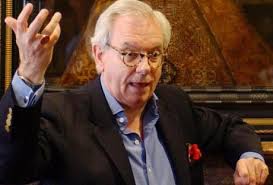
Comment - Historians of the Present - David Olusoga at the Colston 4 trial

[From the London Socialist Historians Group Newsletter 75 Spring 2022]

Historians of the Present

David Olusoga at the Colston 4 trial 


As long ago as the late 1950s the Marxist historian Eric Hobsbawm called for the then Communist Party Historians Group to become ‘historians of the present too’. This was a difficult point because while Marxist historians were free to opine and disagree on the seventeenth and eighteenth centuries, the then Soviet Union determined the view on current history. 

That has now changed but historical input into present day issues has remained quite limited. One obvious example is the almost complete absence of historical views on how Governments have handled pandemics for example. On the other hand a very good example was the expert witness statement that the historian and broadcaster David Olusoga provided to the trial of the Colston 4 in December 2021.

The Colston 4 were found not guilty in January 2022. Martin Booth, a journalist, provided an account of the trial, partially reproduced below. 

Keith Flett

 Thursday Dec 16, 2021 

There were remarkable scenes in Bristol Crown Court on Thursday as one of the UK’s foremost historians was called as an expert defence witness in the trial of the four people accused of criminal damage to the statue of Edward Colston. David Olusoga took the jury back in time several centuries to the height of the transatlantic slave trade, described the horrifying conditions enslaved people were forced to endure and spoke of Colston’s part in the enterprise. In front of a packed public gallery, the professor spoke of Colston’s attempts at “reputation laundering” during his lifetime and later the “cult” that grew up around his philanthropy that led to the erection of his statue in 1895, 174 years after his death in 1721. Olusoga said that the money to pay for the statue was raised by “a tiny group of the city’s elite”, with the wording of the plaque on the now empty plinth “a form of camouflage”. “This is not an issue of amnesia. This is people aware of his background (as a slave trader) finding a way of not saying it.” Olusoga told the jury about the “interventions” that appeared on the statue in recent years when it was still standing, including a knitted ball and chain made of red wool, and a “guerrilla plaque”. He also spoke about an aborted official heritage plaque, whose words were “toned down” by the Society of Merchant Venturers and in particular by Francis Greenacre, one of its members. Olusoga said that the Merchant Venturers “seemed to be committed to trying to historically minimise” Colston’s involvement in the slave trade “by making it seem more normal”. “The statue was not just silent about Colston’s business interests. What offended in particular many people was that it was silent about his victims” including the many children who died on his slave ships. When a reworded plaque was suggested, Olusoga said that “it was felt by mayor Marvin Rees that the final wording was so watered down that it was not appropriate to be erected”. Liam Walker, representing Sage Willoughby, asked Olusoga if the statue of Colston being toppled from its plinth and rolled into the docks on June 7 2020 was an act of violence? “I think it is something I can comment upon,” replied Olusoga…

Tuesday, 2 November 2021

Comment - Socialist historians and the culture wars

[From London Socialist Historians Group Newsletter 74 (Autumn 2021)]

The Tories are continuing to prosecute the Culture War with the appointment of Nadine Dorries as culture secretary. This issue of the Newsletter rounds up a number of the interventions the LSHG has made in some particularly high profile instances. 

Dorries’s first act as culture secretary was to nod through the destruction of the Dorman Long Tower on Teesside. A monument or statue to the steel industry and steel workers on Teesside, it was grade ll listed by Historic England but that didn’t bother Dorries. In a war, tactics and strategies can vary. The Government’s aim is to invent a layer of people it calls ‘woke’ and in reality promote their history over ours. Hence statues of slave traders must stay at all costs, while the Dorman Long Tower must go.


Dorries’s predecessor Oliver Dowden had pursued a slightly different strategy along the lines of ‘retain and explain’. He oversaw a policy that no statue or monument should be moved or taken down. He claimed he preferred new statues to be erected but in fact during his tenure as Minister none were. It might be argued that much of this is simply a distraction launched by the Tories while they get on with bashing the working poor. However, it is also something that seeks to establish and dictate exactly what British history is or is not. 

That is reflected not just in statue wars but in terms of persistent interventions by Tory politicians into what history is taught in schools and universities. Labour has had very little to say on this, not least because it’s clear that the current leader Starmer is not a history man. It is however a task that socialist historians need to address and dispute rather than leave the field to Tory propagandists. 

Thatcher laid waste to industry on Teesside. Now Dorries want to destroy the industrial heritage. The Dorman Long tower at the former steel works at Redcar on Teesside was built to store coal in the 1950s. It was a fine example of brutalist industrial architecture. Unsurprisingly the Tory mayor covering the area, Ben Houchen, would prefer to have no reminders of Thatcherite destruction of jobs and industry left on Teesside. He lobbied for the tower to be destroyed - an act of Tory industrial vandalism.

 I lived on Teesside in the 1970s and 1980s including the 1980 steel strike, in which I had a supporting role. The destruction by Thatcher of people’s livelihoods and lives has left a dreadful legacy and, as Dorries’s diktat shows, the Tories are proud of that legacy. Given that Dowden went to great lengths to make sure that no bit of existing British history was in anyway moved let alone destroyed, presumably Ms Dorries will no raise no objection to a few old statues being taken down as well.

 https://www.bbc.co.uk/news/uk-england-tees-58593615 

Keith Flett

Tuesday, 27 July 2021

Geffrye Must Fall

Museum of the Home reopens: Statue of slaver Geffrye remains in place 


The Museum of the Home (@MuseumoftheHome) in Hackney, London has re-opened after a lengthy closure for refurbishment. Some important and interesting changes have been made. One change that hasn’t been made is to remove the statue of slave trader Robert Geffrye (1613-1703) that is in a central place at the old front of the museum. 

When the Black Lives Matter movement resurged after the murder of George Floyd a year ago there was a consultation, jointly with Hackney Council, on whether the statue should be moved. 71% of the 2,000 or so local respondents said it should be. This was blocked by Ministers Dowden and Jenrick.

 This move reflects the frankly weird ideological obsessions of the present Government. Robert Geffrye funded the almshouses in which the museum, much later from 1914, came to be housed. He is absolutely nothing to do with it and there is no historical reason for his statue to be there (as opposed to elsewhere nearby). 

Indeed the unlikely source of the Daily Telegraph (11th June) has reported that Museum staff feel the statue could be better represented and explained if it was moved from its current central position to the area nearby where Geffrye is actually buried. 

The Museum has made some changes to reflect the area in which its based better. There is a new exhibition of a ‘West Indian sitting room’ from 1976 (though this might be more frequently be defined by area in 2021- i.e Jamaican, Trindadian..). 

There is a also a new film: https://www.museu mofthehome.org.uk /what-son/exhibitions-andinstallations/waiting -for-myself-toappear/ 

Stand Up To Racism (including local MP Diane Abbott, pictured) and others continue to protest. Keep in mind though that the museum staff are professionals and trade unionists. The Tory decision on Geffrye is ‘above their pay grade’. 

Keith Flett

George Osborne, the British Museum and the Culture Wars

George Osborne, Bullingdon Club member, austerity Chancellor: Will he fight the Culture War at the British Museum? 

George Osborne has been appointed to the Chair of the Trustees of the British Museum from October replacing the FT’s Richard Lambert. Osborne has had quite a number of very well paid sinecures since he stepped down as an MP in 2017 as this Guardian report notes: https://www.theguardian.com/culture/2021/jun/24/exchancellor-george-osborne-appointed-chair-british-museum 

When he was Chancellor his 2010 Budget reduced funding for Museums by 15%. The BM’s recent controversial partnership with BP which has attracted protests was justified on the basis of the need to raise funds. 

Osborne claims he has always loved the BM. While his appointment certainly owes a good deal more to the chumocracy than the meritocracy he does have a 2:1 in modern history from Oxford. It is not the ideal historical perspective for the BM which tends to deal in not-so-modern history (though far from exclusively so) but it should mean he has some general appreciation of some of the historical issues the BM faces. 

Professor Dan Hicks and others have raised the question of why the BM has retained artefacts which were istolen or plundered from other countries during the imperial era. The ‘Elgin’ Marbles are the most well known of these artefacts but there are many others. Prof. Hicks has argued that while Osborne’s past is well-known we can’t be certain whether he will back Oliver Dowden’s Culture Wars approach: 

https://elephant.art/does-george-osborne-at-the-britishmuseum-signal-a-devastating-blow-to-the-arts-25062021/ 

He may have a point. Osborne after all was a neo-liberal Chancellor in a Tory Government in some ways different to the current one. It did not for example promote culture wars. As a nineteenth century labour and socialist historian the battle in my field is to get things retained in museums at all and it’s about trying to get statues of significant figures put up not taken down or moved. 

At the same time the London Socialist Historians Group has always linked academic research with political activism, and there is a keen interest in understanding more about Britain’s imperial past and making sure that the history counts in respect of modern day anti-racist and anti-imperialist politics. Hicks argues that the mood music across Europe, reflected now in Scotland, is to reflect anti-racism and to look carefully at what is retained and what is returned in respect of museum holdings. He also suggests that Osborne is aware of that and could bypass Dowden’s culture wars. We’ll see.

Keith Flett

Tyrants of England should be sung in schools

LSHG call for singing Tyrants of England in schools rather than Gavin Williamson’s One Britain, One Nation ditty 

The traditional song, formally The Hand-Loom Weaver’s Lament, dates back to the Luddite period in British history around the time of Peterloo in 1819, and is still sung in folk clubs. It is one of the most well-known English working class songs and the words are quoted in full in E P Thompson’s The Making of the English Working Class

The LSHG says that when first sung in the early decades of the nineteenth century it was seen as a truly patriotic song, defending the principles and livelihood of the 'Freeborn Englishman’ against those who were trying to sweep away traditional rights and living standards and introduce a system of market capitalism. Tyrants of England sums up well the Government of which Gavin Williamson is a part.

What’s more, unlike like his little ditty it has a two hundred year history calling out political and economic oppression. 

You gentlemen and tradesmen that ride about at will, 

 Look down on these poor people. It's enough to make you crill. 

 Look down on these poor people, as you ride up and down 

 I think there is a God above will bring your pride quite down. 

Chorus: 

You tyrants of England! Your race may soon be run. 

You may be brought unto account for what you've sorely done. 

You can hear a version of this song here: https://m.youtube.com/watch?v=SlXUnxUQW7c 

It appears on a CD collection called 'The Iron Muse: A Panorama of Industrial Folk Song' from Topic Records. More details: https://en.m.wikipedia.org/wiki/ The_Iron_Muse

Comment: Socialist History in danger from the Tories

 [From London Socialist Historians Group Newsletter 73 Summer 2021]

Both the Royal Historical Society and the Society for the Study of the Labour History have published statements underlining the danger of withdrawing the study of history from Post-92 environments (mostly former polytechnics). A link to both statements is below. 

The London Socialist Historians Group is in support. While we support and encourage political activism and research outside of the confines of traditional academic boundaries we also recognise the importance of having the possibility of studying labour and socialist history within the academy. That is why, for example, we have organised the socialist history seminar at the Institute of Historical Research since 1995. 

As both statements indicate withdrawing history from the post-92 universities would make the subject less available to working-class students unable to study far from home for a range of reasons. Further, the Government has been engaged in a process of moving funding away from ‘arts’ subjects towards science on the basis that degrees in this area add more value to the economy. 

There are of course limits to this prejudice. History teaching will certainly continue at the Russell Group universities sometimes described as the ‘elite’. While history teaching at these institutions may not always be of a traditional and conservative nature they certainly have turned out in the past generations of historians in suits with a worldview that is mostly on the right of the political spectrum.

 https://sslh.org.uk/2021/05/27/sslh-statement-wefear-for-the-future-of-labour-history-labourhistorians-and-the-next-generation-of-students/ 

The Editor notes: I studied history at what is now a post-92 university, Teesside, in the mid-1970s. It’s true of course that most of my subsequent historical research was done at an elite institution, what is now UCL. Even so a degree in history (and politics) was not a bar to getting a job in the Civil Service who took the view that the general skills learnt at degree level were quite adequate and set me off managing building projects… These experiences were a while ago now but we must not let the teaching of history itself become largely history.

 Keith Flett

Tuesday, 30 March 2021

Comment - Time to end Tory Culture Wars on History

[From London Socialist Historians Group Newsletter, 72 (Spring 2021)]

"IT IS QUITE WRONG THAT THESE LOONY LEFT-WING WHEEZES SHOULD BE INFLICTED UPON OUR GREAT METROPOLIS.” - JACOB REES MOGG

The Tory culture war on history and those who challenge particular narratives of British history is not only continuing but expanding. Jacob Rees-Mogg has criticised the London mayor Sadiq Khan’s plans to review statues and street names in the capital in the light of the Black Lives Matter movement. He told hard right Tory backbencher Andrew Rosindell that British history should be celebrated. That would include of course the slave trade and numerous imperial conquests. 

Meanwhile education secretary Gavin Williamson, finding the task of providing safe education in a pandemic beyond him, has turned his attention instead to ‘free speech’. A 34-page policy paper has been issued which may lead to legislation.

It would be fair to say that the paper is not all Gavin’s own work but that of civil servants who are rather more professional in their approach than the education secretary. It has the temerity to refer to groups who have struggled to get free speech in the past, such as those fighting for gay rights. It doesn’t mention that the fight was in part necessary because of the Tories’ Clause 28 in the 1980s which sought to restrict discussion of such matters. 

In general though it appears to be a defence of the values of a liberal education, until one absorbs the detail. Its actual thrust is to make sure that assorted racists, Islamophobes and reactionaries can speak without protest in public settings. 

The problem Williamson has is that they already can - as the left knows all too well. The Times, which generally supports Tory culture wars, surveyed thousands of speaking events at universities and found issues with just six. Most were reportedly related to problems with organisation - missing paperwork and so on. One was a Jeremy Corbyn meeting that had to be cancelled and re-arranged because the venue was too small to hold numbers attending. 

Williamson’s ministerial colleague Oliver Dowden has also been active on the matter. The lines below relate to a communication the culture secretary Oliver Dowden has had with the ‘Commonsense’ group of hard right Tory MPs. They are the motor for the Tory culture wars. 

"History is ridden with moral complexity, and interpreting Britain's past should not be an excuse to tell an overly-simplistic version of our national story, in which we damn the faults of previous generations whilst forgetting their many great achievements. Purging uncomfortable elements of our past does nothing but damage our understanding of it." 

Dowden’s comments have drawn criticisms from many historians with the biographer of Eric Hobsbawm, Richard Evans, calling for an end to the Tory war on history. 

The point is that Dowden’s words reflect a lack of understanding of what history is, just as Williamson’s supposed defence of an abstract ‘free speech’ does. What is understood by history and what is seen as important and relevant in it varies over time. 

In particular it is informed by historical research that uncovers new historical details and suggests fresh ways of understanding our past. Recently for example I, along with others, have been wondering if the black presence in the Chartist movement was not rather greater than has been previously thought, given that Britain in the first half of the nineteenth century had quite large numbers of black working class residents, mainly sailors or ex-sailors. 

Until more research is done the answer is that we simply don’t know. If we followed Oliver Dowden’s perspective, that British history is an unchanging thing written on tablets of stone, we wouldn’t even bother to find out. 

That doesn’t seem much like freedom of thought and speech. 

Keith Flett

From Cinderloo 1821 to Shrewsbury Pickets 1972 - Keith Flett

[From London Socialist Historians Group Newsletter 72 (Spring 2021)]

From Cinderloo 1821 to Shrewsbury Pickets 1972: Employers and the law in North Wales and Shropshire 


The first week of February 2021 saw a couple of labour movement occasions which were centred on Shropshire and North Wales. 

It was the 200th anniversary of the event known as Cinderloo, where miners protesting about wage cuts were attacked by the Shropshire Yeomanry. Several were killed and others put on trial at Shrewsbury.

 Over two days in the same week the long overdue appeal by building workers convicted as part of the 1972 national building strike, where the matters at issue also took place in the Shrewsbury area, took place.

The events of February 1821 whose anniversary was marked with a range of virtual activities took place at Cinderhill near Telford. Local ironmasters had been engaged in an attempt to cut the wages of workers. Fearing that the same would happen to them, miners called a protest which took place over two days on 1st and 2nd February 1821. The occasion was known as Cinderloo as a conscious echo of Peterloo in 1819. On both occasions local Yeomanry, armed men on horseback, were deployed and attacked protesters.

Several of the key figures in the Shropshire Yeomanry were ironmasters. A 2017 article by local historian Neil Clarke underlined this. The Yeomanry had been formed at a meeting in a Shrewsbury pub in 1785 by the then mayor, William Cludde. His son Edward Cludde was in charge at Cinderloo in 1821. They were landowners as were numbers of other members. Local ironmasters Henry Williams and Joseph Reynolds were also part of the armed troop as was wine merchant Thomas Jukes Collier. In short the Yeomanry were the armed force of the local ruling class. They were last used in the 1842 General Strike before the policing framework we know today developed. 

If we fast forward to the Shrewsbury Pickets’ arrests in 1972, which occurred in the same area of the country, we find some interesting parallels. Of course the local ruling class was no longer required to ride around armed on horseback cutting down any working class protests they found. They still maintained however a key interest in defending their wealth and using the law and its agents to do it. 

In 1972 it was the well-known construction family the McAlpines who exercised great influence in the area as the Shrewsbury 24 campaign website underlines. 

The website notes that McAlpines were the main contractor at the Brookside building site in Shrewsbury which was a focus of charges against pickets. The McAlpine family were a cornerstone of ruling class politics in North Wales. Prior to the events of 1972 the post of the most senior law officer in the area, the High Sheriff, had been held by members of the McAlpine family on nine consecutive occasions. Even when the succession was broken in 1974 the occupant, Peter Bell, was in fact a director of McAlpines and the son-in-law of Sir Alfred McAlpine. 

As the Shrewsbury pickets’ appeal underlined, there was probably more at play in the case than the McAlpines, with the direct influence of the security service and Heath’s Tory government suspected.

 Political influence also existed at Cinderloo with the home secretary, who had found nothing problematic about the Peterloo Massacre, Lord Sidmouth, writing to the Lord Lieutenant of Shropshire praising the ’exemplary forbearance’ of the Yeomanry. 

E P Thompson noted in The Making of the English Working Class that the state learnt from Peterloo that it could never use armed force against protesters again, but that the same did not apply to industrial disputes. Cinderloo underlined that and Orgreave in 1984 reminds us that it remains true. 

Keith Flett

Sunday, 8 November 2020

Imperialism, racism, the Tories and education

From London Socialist Historians Group Newsletter 71 (Autumn 2020)

Imperialism, racism, the Tories and education

 The Morning Star (27 September 2020) cites the new UK Department for Education Plan for teaching which instructs schools to ‘not under any circumstances use resources by organisations’ whose publicly stated desire is ‘to abolish or overthrow democracy, capitalism, or to end free and fair elections’. And further, and equally alarming, this covers all resources and is to be enforced ‘even if the material itself is not extreme, as the use of it could imply endorsement or support of the organisation’. 

Of course, the variants and viciousness of capitalism are part and parcel of every colonial and national history, every part of social being, from disease and health to education, to workplace and the criminal law, and much in between. We know a lot about every stage of suffering, at home and in the former colonies due to liberal writers, Quakers, the left and the Communist, publishing extensive details, together ‘modern’ with the sordid and brutal; Cheddi Jagan, for instance, on British Guiana, C.L.R. James on Haiti, H.N. Brailsford and Rajani Palme Dutt on the Indian empire; I want others to read Wadia & Merchant (Bombay 1945), the older literature from South Africa and the empire and in recent times the appalling developments in capitalist plus military regimes: Indonesia, the Philippines, the history of Latin America, the oil producing middle east. 

Publishers, and not only those on left, offer an open door to those who write on ex-colonial and capitalist issues: questions which are upsetting to read; torture, detention of children, illegal rendition, brutal labour contracts, as well as standard works on the need to modify and replace capitalism, not just the dreadful forms of old colonial times, but those right now causing mis-treatment and damage to the environment, the seas, the forests, and to people. These texts make us think. 

Literature for much of the world carries politics and provides balance to everyday life.  Is the Tory Plan to block reading literature which is unsettling about capitalism ? Well, here be a vast library: Doris Lessing on Rhodesia, a Communist who in late 1956 wrote to John Gollan that she now thought of herself as a non-Party Bolshevik: is she included ? How about Stella Jackson, and her father T. A Jackson, with his work Ireland Her Own ? Can I prescribe Leonard Cassini, Music in Rumania ? Anything by Len Doherty who wrote regularly for World News ? E P Thompson’s work on William Morris came out whilst he was still in the Communist Party ? Jack Lindsay whose output straddled the middle years of last century ? Should we include on the allowed literature Ilya Ehrenburg The Thaw, who was not only a Soviet Party member, the early translation was edited by Jack Lindsay ? And while we are considering literature, should the Communist literature published in the Soviet Union be banned ? That’s a lot of novels on the list. 

For school students with relatives in old colonies this Tory Plan restricts access to books likely to encourage interest in how their countries suffered under colonialism. Teenagers want to know about their historical past. Why did the British take over their country ? What were the benefits for conquest: landowning (such as the white highlands), gold (South Africa) silver (the opium trade) trade in general, building railways and ports, tea plantations, labour relations (indentured servants in Trinidad). When the British announced ‘independence’ what form did it take ? Who got the keys to government house ? Palme-Dutt has really basic, easy to read, books on the Indian empire ? Are reprints banned ? This Tory Plan clamps a veil on Asian, Chinese, Indian, Irish and Caribbean studies, impeding knowledge, and banning whole shelves as dangerous. 

School students will also ask about violence. The massacres that took place in the Indian empire, even as late at March 1946 in Bombay, with the Indian navy revolt, and the subsequent shootings, even as far away as Bihar. We also know about fascism, the propensity of capitalists to call in the law and the military. The reach for the gun by settlers in Kenya, Malaya, Ireland; it’s a long list whose omissions would significantly damage the education of our children.

 [Is Keith Flett to be banned, and the London Socialist historians ?] 

Richard Vessey Saville

Comment - Trump and 'Patriotic History'

From London Socialist Historians Group Newsletter 71 (Autumn 2020)

Trump speaks on 'Patriotic History'

UK reporting of Donald Trump tends to focus on certain aspects of his, at best, erratic behaviour, so his recent pronouncements on US history did not receive as much attention as they might merit. While Boris Johnson has not, as far as I know, demanded an official patriotic update of Our Island Story a fair amount of Tory culture wars are in this area. I doubt Johnson has ever heard of E P Thompson’s Making of the English Working Class which was the model for Howard Zinn’s work referenced below. That said the history of working class struggle for civil rights, democracy and justice is hardly the matter of every day discourse in 2020, sadly. Johnson told the 2020 Tory conference that he wants to make sure that all of British history is told. That includes the history of racism and imperialism and the fight against it. Inconvenient for Johnson that may be but socialist historians need to continue to make sure it is unavoidable. 

Trump wants history to be taught as a celebration of the United States and its achievements, and wants it taught in such a way as to erase the achievements of popular movements, including unions and civil rights organizations. He singled out for condemnation Howard Zinn’s A People’s History of the United States. Trump and the people around him who wrote his speech, white nationalists like Stephen Miller, want to turn the clock back to a time when they imagine historians only wrote the history of white presidents and other elite actors, and when they did so with gushing praise. There never really was such a time. Professional historians have always been sceptical and the very tools of their profession are seditious, because history teaches us that things could have been different (contingency) and can still be different. 

Keith Flett

Wednesday, 8 July 2020

David Starkey's 'apology' not accepted


The London Socialist Historians Group, which organises the socialist history seminar at the Institute of Historical Research in central London has said that David Starkey’s apology for comments he made about slavery and Black Lives Matter doesn’t go far enough
The comments were made in a  widely publicised YouTube interview on Thursday July 2nd when Starkey made a number of bigoted comments about the Black Lives Matters movement. The interviewer Darren Grimes has since apologised himself for not picking up Starkey up at the time.
The historians say that while Starkey has apologised ‘unreservedly’ for his most recent outburst his record of making racist comments stretches back a good number of years. The BBC received many complaints when Starkey offered a qualified defence of Enoch Powell’s Rivers of Blood speech on Newsnight in 2011.
Moreover he needs to accept that simply rubbishing the idea of black Tudor history is not appropriate. In the interview he suggested that Dr Miranda Kaufman’s book on the Black Tudors consisted of chapters that were half in italics because there was little historical evidence. In fact the first paragraph of each chapter is italicised and the remainder is copiously footnoted
London Socialist Historians convenor Dr Keith Flett said, David Starkey’s apology mostly about the impact on himself. The media need to stop using him as a ‘go to’ historian on matters about which he has no specialist knowledge. He needs to acknowledge that it is not what his remarks have ‘cost’ him but their impact in reinforcing racist ideas. A period of silence from Dr Starkey while he returns to the archives to review the evidence for black Tudor history would be very welcome.
For more please contact Keith Flett at the address above.  

Monday, 15 June 2020

Comment: From Hurricane Katrina to Covid-19

[From London Socialist Historians Group Newsletter 70 (Summer 2020)]

Like George W Bush with Katrina, Boris Johnson discovers ‘People we didn’t know exist’ 

 When Henry Mayhew started the series of social investigations into the London working-class in 1849 that was to become London Labour and the London Poor he laid out a prospectus in the Morning Chronicle. He wrote of investigating the ‘large and comparatively unknown body of people’ who comprised the labouring poor who lived in slum housing often in insanitary conditions with at best uncertain employment.

He set a pattern that has emerged at times of crisis since.

When Hurricane Katrina hit New Orleans in 2005 revealing a government and president in George W Bush that was not only unprepared to deal with it but had reduced funding previously for measures that might have helped, the  Federal Emergency Management Agency’s Michael Brown said, "We're seeing people that we didn't know exist’.

The former Guardian journalist Gary Younge who reported from New Orleans at the time recently made the link to the situation now.

The pattern of Katrina has indeed been echoed in the government’s handling of the COVID-19 crisis.

Only after sustained pressure by a few media critics did the government agree to publish the daily totals of deaths in care homes. These were and remain sadly substantial. Some have argued that the residents of homes were not hospitalised when seriously ill but left and cut again, and housing conditions which are far from ideal as to die where they were to avoid the NHS being overwhelmed. An independent inquiry will need to examine that as well as the failure to provide adequate PPE for workers in the homes.

Yet, picking up on Younge’s point, another perspective might be that the government didn’t really know what the scale of the problem in care homes was and, based on its earlier herd immunity strategy, now changed, believed that numbers of the elderly and vulnerable would die anyway.

Reality has a way of intruding into right-wing ideological fantasy strategies, as George W Bush found out in 2005.

This came recently with the publication of details, broken down to local authority areas, by the Office of National Statistics of all COVID-19 deaths from 1 March to 17 April. This wasn’t some exercise in constructing a league table of deaths - important though it is to record every death and value every life. Rather it focused attention on where COVID-19 deaths had been particularly high and implicitly invited discussion of why this might be.

Of the 11 areas with the highest death rate everyone was in London The pattern of poverty, housing and health identified 171 years ago by Henry Mayhew in London’s poorest districts continues. The highest UK COVID-19 mortality rates per 100 000 population in the UK are in the  London Boroughs of Newham 144.3, Brent 141.5, Hackney 127.4, Tower Hamlets 122.9 and Haringey 119.3.

Philip Glanville, the Mayor of Hackney, quoted in the Financial Times on 2 May argued that “the links between inequality, poverty, ethnicity and health” were the key to his borough’s death rate of 127 per 100,000.

Indeed these are people, overwhelmingly poor, workingclass, many from ethnic minorities, who have suffered years of Tory austerity, of public services and the NHS cut the cost of homes in London has soared and Tory policies, meaning little council housing has been built. Yet these same people are those who keep the NHS going, who drive buses and tubes, who clean streets and work in supermarkets. They are low paid but as the last two months have underlined absolutely essential.

The Tories may not have known such people existed, but they do now, and political change is on the agenda.

Keith Flett

Monday, 8 June 2020

Black Lives Matter - Socialist Historians renew call for teaching of history of colonialism and the role of Empire in schools

Socialist Historians renew call for teaching of history of colonialism & the role of Empire in schools
The London Socialist Historians Group which organises the socialist history seminar at the Institute of Historical Research at the University of London, Senate House has renewed its call for the history of colonialism and the role of Empire to be a key part of the school history curriculum.
As recently as November 2019 the Labour Party launched a Race and Faith Manifesto at the Bernie Grant Centre in Tottenham on 26th November (link below).
While Labour didn’t win the Election the ideas put forward remain highly relevant as Black Lives Matters protests demand justice on racism and discrimination
Part of the Manifesto called for ‘the creation of an Emancipation Educational Trust to ensure historical injustice, colonialism and role of the British empire is taught in the National Curriculum’
The historians say that while it is the case that Empire and colonialism may feature in some school history lessons today it is not done systematically or as part of the examined curriculum.
Britain’s imperial heritage from the slave trade, to its control of countries across the globe from the late nineteenth century, to the modern day descendants of those impacted on this who play such an essential role in Britain today is something that every school student needs to know about
LSHG Convenor Dr Keith Flett said, we’re just coming up to the 150th anniversary of the death of  William Cuffay in Tasmania in July 1870. Cuffay the black leader of London Chartism in 1848 fought for democracy and the vote. For his pains he was arrested and transported to Australia, where he continued fighting for democracy. Cuffay is not a figure who will be familiar to most school students but he should be. The proposals Labour brought forward in 2019 point to one way that this can start to be addressed.
Please contact Keith Flett at the address above for more information

Tuesday, 11 February 2020

Comment: Labour leaders and labour history

[From LSHG Newsletter No. 69 Spring 2020] 

Labour leaders and labour history 

The current Labour leadership contest has highlighted an issue that is not brought up that much - Labour leaders and their knowledge of labour history.

Rebecca Long Bailey raised the far from uncontroversial idea of progressive patriotism, something that has been discussed on the left since at least the Falklands War. She did give an historical example of the American Civil War but the history of British workers’ attitudes to it is not a simple one.

Keir Starmer wrote a piece for the Guardian about making a case for moral socialism without managing even a nod to Harold Wilson’s phrase that Labour is a moral crusade or it is nothing (associated with the origins of War on Want). Starmer however also managed to tweet on the 165th anniversary of the birth of Eleanor Marx (16 January). His background makes it difficult to call his knowledge of labour history.
https://www.theguardian.com/commentisfree/2020/j an/15/labour-socialism-values-election-economicmodel.

While Jeremy Corbyn, like Tony Benn, has an abiding interest in history he is not by any means an historian. One Labour leader who was definitely in that category was Tony Blair. A university librarian once told me that, before he was leader, Blair had to give a speech involving a mention of the Webbs. He had no idea who they were and turned up to borrow a book on them.

Blair however was the anti-history leader. If New Labour was to be really ‘new’ it could by definition keep on banging on about the past. Blair did go as far  though as to unveil the statue of Harold Wilson outside Huddersfield station.

Wilson himself operated in the framework of a slightly different Labour politics. He was not one to miss a Durham Miners’ Gala, or to call out Communists, or those like trade unionist John Prescott, who he thought were.

As a socialist historian I think its useful for Labour leaders to know something of Labour and labour history. Perhaps being leader should require a test on the matter. It’s probably too much to hope they’d learn from it but certainly a critical awareness of recent labour history and the way Labour has reacted to and handled electoral defeats in the past 50 years would not go amiss.

Keith Flett

Monday, 27 January 2020

The History of Now (2008)

The History of Now: a work in progress
Written By: Julienne Ford
Date: April 2008
Published In LSHG Newsletter Issue 31: Summer 2008  

I started the current project modestly and reasonably enough by attempting to revise the labour theory of value (yes already I have made some enmity!) to produce a practical economics that factored in environmental justice as well as making it possible for alternative communities to infiltrate, and hopefully to some degree subvert, the global corporate concentrations of capital.(1) This meant that I had to go into the details of the carbon trading concepts and the history of its development and gradual adoption by capital and its lackeys. (Incidentally, the carbon trading bank through which these tokens are traded exclusively is owned by the best mate of the guy, Aubrey Meyer(2), who managed to get the scheme adopted!). So I read closely most of the Schumacher briefings and engaged with the position of the Resurgence people. In particular I was struck by a popularisation of this position by David Edwards.(3) This book seemed to sum up the whole thrust of a loose grouping of Fabianish artisans connected with Summerhill and Dartington Hall, as well as the Resurgence people (who include some who were at various times insiders in the Blair circle – e.g. Mulgan.) They do concede that corporate capitalism is destroying the Earth as well as the psychic and physical well-being of the majority of the people on it. Their analysis is lifted straight from Marx but not attributed to him: terms (e.g. the word “monetocracy”) are invented to purvey this framework as though it has sprung afresh from a new paradigm. That’s ok with me actually, because if this gets a Marxist critical perspective understood and adopted widely among well-meaning, rather well-heeled, people, who are worrying about the future of their children, then it is all to the good. However, what I won’t swallow is the claptrap that the ‘monetocrats’ need our sympathy even more than the dispossessed and oppressed because, apparently, they have less chance of seeing the world as it really is. Nor can I accept the ridiculous attempt to tame corporate capitalism rather than destroying it. This is, after all, the same guff that morphed into the ‘third way’ with which New Labour continued the historic process of social democratic collusion with capital by controlling the population on its behalf - this time, rather than achieving this by some amelioration of the worst of the emiseration, they did it by naked terror and unconstrained exercise of illegitimate power.

Another aspect of this green Menshevism is the widespread demonisation of Marxists, revolutionaries and freedom fighters, which ascribes to us some kind of thirst for ‘the Terror’ akin to the Bush/Blair idea that Muslims celebrate death rather than life. These people carefully pick the objective conditions from between the lines of the monetocratic conspiracy (drawing on excellent writers like Chomsky, Zinn, Pilger, Glasgow Media Group etc.) but when talking about ‘anarchists’ or Marxists they rely heavily on the very same propaganda that they have just exposed.

The politics of the ‘Green movement’ and especially the British Green Party has been, and remains, opposed to left-wing insights, tending to caricature us as Stalinist, macho, intolerant and innately predisposed to violence. This stereotyping is partly based on ignorance of the actual writings of Marxism-Leninism, Mao, and the Panthers etc., partly on a lazy reliance on media information on anything outside their own experience, and a little bit on deliberate obfuscation. The Lovelock ‘Gaia’ notion was a godsend (ha ha) to those who wanted to make a premature closure to the top of their paradigm. When Lovelock started saying that the crisis was now so urgent we had better have nuclear power some people thought he had ‘lost it’ or been nobbled. But actually his Gaia hypothesis is fundamentally conservative theology, a physical-world equivalent of Talcott Parsons structural-functionalism(4) , i.e. a batty teleology which says leave alone and all will work out for the best. He never was any champion of oppressed and dispossessed humanity.

But, just as the ‘tipping point’ has been reached in recognising the environmental crisis and its urgency, so I believe this point is fast approaching in the bigger awareness of the relationship between that crisis and the structures of exploitation. I have great respect for popular writers like Naomi Klein and George Monbiot who make it fashionable among the chattering strata to decry capitalism itself. And more and more ‘soft’ movements like the eco-village networks have come to understand the importance of bottom-up structures for decision making. Liberation movements from the Zapatistas to ‘God’s Bollocks’ in the Lebanon are an inspiration which historians may recognize as echoes from earlier liberation movements, and which have fired the World Social Forum and reminded many movers and shakers that prior to the twentieth century this is how all the progressive movements in the so-called first world operated. The struggle of organised industrial labour is clearly tied to specific historical circumstances and, though it must not be abandoned, it cannot be enough in this century when the bitter fruits of the changing structure of industry (so aptly and irritatingly explained by Hobsbawm(5) have to be reaped by the “excluded”(6) and by the New Deal family with its two overworked parents whose next baby is being headhunted for one of New Labour’s baby-ASBOs.

At the same time the internet obviously gives globalisation a hint of optimistic possibility, of HP Newton’s Revolutionary (as opposed to reactionary) Intercommunalism.(7)

My own position was wrought from Newton’s idea of Revolutionary Love refined by the theory and praxis of the New Jewel Movement in London and Grenada. I now see this as a form of anti-imperialism which has benefited from third world liberation struggles as much as from that of the industrial working class in the imperial nations, and has benefited most of all from international solidarity.

I cannot stress strongly enough that whatever one reads from ‘engaged Buddhism’, ‘deep ecology’, Earth-First type anarchism, European and Asian Trotskyism, modern ‘Eurocommunism’, Rastafarian Rodneyism, radical Islam, the UK ‘nationalists’ and Alliance of Green Socialists, etc. - we are all ‘singing from the same sheet’. One has only to look at Castro’s study of liberation theology or his latest (2007) essay on international solidarity, to appreciate the synchronicity of the Zapatista metaphor that we make the road by walking – and as we walk we talk: we debate, we argue, we progress both dialectical theory and praxis.

I call this position dialectical universalism.

Stringent dialectics easily dismisses the terrible mistakes of diamat and Stalinism. Rather, I suggest, it is worth rehabilitating(8) the dialectical method as understood by Engels(9) and showing how pushing to the negation of the negation is the form of reasoning which suits our evolving human consciousness.(10) When Greimas’ application of Boolean logic(11) is applied to it, it becomes absolutely transparent and easy: one is left marvelling that such blundering forms of cognitive manipulation as induction and deduction ever became hegemonised to the extent that they did.
Universalism argues cogently for a permanent progression of abstraction, taking the perspective further and further away, like Giodarno Bruno’s idea that if a point of light is removed to infinity it illuminates the whole sphere. Diamat was an attempt to close the paradigm prematurely with some stupid metaphysical materialism that was strangely identical to the kind of scientism now paradoxically expounded by American Fundamental Christianity.(12) Postmodernism rightly ridiculed this. But Engels had already demonstrated that empiricism spawns its own crazy idealist metaphysic.

Atheism as an ideological commitment is another mistake shown up for what it is by dialectical universalism. Many of us reject deism but that does not make us atheists. It’s not a question of choosing a god (or gods) or being ‘an atheist’. Presumably an atheist is someone who doesn’t accept any faith, not someone who doesn’t believe in a god (otherwise Buddhists would be atheists). Any notion of transcendent properties, even something like ‘collective conscience’ or, say, ‘the proletariat as the universal class’ posits a noumenal entity which helps make sense of the entire paradigm. I don’t really care if people believe in fairies as long as they are universalist fairies who won’t stop flitting around and jingling their annoying little bells until all the people of the earth ‘not only control the productive and institutional units of society ... but have seized possession of their own subconscious attitudes towards these things’. (Newton(13))
Universalism does not require unanimity of taste, preference and practice. It is nothing like the ‘integration’ which New Labour wants instead of ‘multiculturalism’. We don’t all have to have identical beliefs and values. Any fairy or god or philosophy is good enough as long as it is predicated on our human responsibility to the overall collective, and recognition of the consequences for all of the behaviour of each. Sidney Webb(14) gives data on the Soviet education system in the 1920s when Russian was the second language in all schools and many vernacular tongues were given written forms for the first time – and not in Cyrillic but in the Roman alphabet. 100% literacy was achieved in less than a decade, showing that it is possible to do this in a vast, diverse system and not just in a tiny island like Grenada.

Personally I think Paul Kingsnorth’s prescient slogan ONE NO AND MANY YESES(15) is spot on. More and more people can see what is wrong with global capitalism but only idiots would wish to replace it with another hegemony.

So now, as I see it, the task is not so much to write out a useful synthesis (though I am determined to have a bash) as to work out the structures of support and solidarity, of information-sharing and inspiration, cooperation and coordination, and of spreading the word far beyond the traditional spheres of socialist sympathy that will enable us to seize the coming moment and avert the present catastrophe in what Bunny Wailer has so aptly called ‘the nick of time’.(16)

With regard to such structures I am convinced that the most pressing task is to work out how to use Web 2.0 – perhaps with webcams etc. – to create a form of universal videoconferencing that enables a system(17) of thousands of ‘workshop groups’ (perhaps of about fifteen members each) to discuss issues, distil conclusions and have those conclusions presented at plenary sessions, then translate into further discussion and keep repeating the process. It is a process that could properly be called participative democracy: as opposed to representational ‘democracy’ where you get a chance to choose between tweedledum and tweedledee every four years and ‘whoever you vote for the government gets in’, taking over the authoritarian structures of repression and putting their own brand-stamp of ‘leadership’ on them. If we cannot do this we must drown in our own self-righteousness as the tide of toxic, radioactive emotional subjectivist sewage rises above our pathetic appetites for self-aggrandisement.

NOTES
1. The current (2008) formulation for this is ‘An appropriate planetary economics would not be based on exchange value in the global market but on usefulness in specific times and places, as mediated by mindfulness, both in the identification and rejection of (displaced) exploitation and expropriation, and in the defence of indigenous autopoesis’. Julienne Ford Never Point at a Rainbow: dialectical universalism and the project of humanity (Superscript, August 2008)
2. Aubrey Meyer, Contraction and Convergence (Green Books, 2000)
3. David Edwards, The Compassionate Revolution (Green Books, 1998)
4 Talcott Parsons, The Structure of Social Action (Free Press, 1967)
5. Eric Hobsbawm, The Forward March of Labour Halted? (Verso, 1981)
6. The collusion of social scientists with the entrenchment of the term ‘excluded’ to refer to those outside or ‘below’ the organized working class is as much part of the rightward shift of the discipline of sociology as it is a continuance of the deliberate ignorance of the role of the dispossessed, wretched, enslaved, imprisoned and so-called ‘lumpen’ brought to the centre of the historical stage in HP Newton’s analysis. H P Newton and V I Lenin, Revolutionary Intercommunalism and the Right of Nations to Self-Determination (Superscript, 2004)
7. Ibid.
8. Such a rehabilitation would have almost nothing in common with Zizek’s defeatist attempt at the same task. The Parallax View (MIT, 2006)
9. Friedrich Engels, The Dialectics of Nature (Progressive, 1954) and Anti- Dühring (Progressive, 1947)
10. I have found nothing on this topic as enlightening as E V Ilyenkov, Leninist Dialectics and the Metaphysics of Positivism (New Park, 1982)
11. A.J. Greimas, Semantique Structurale (PUF,1995)
12. Woods and Grant also make this point, Alan Woods and Ted Grant Reason in Revolt: dialectical philosophy and modern science (Algora, 2002) Vol 1 p.215. A similar position from outside a Marxist perspective comes from Tina Beattie The New Atheists (Darton,Longman & Todd Ltd, 2007)
13. Op. cit.
14. Sidney Webb, Soviet Communism: A New Civilisation? (Longman,1935) p.67 Vol 2
15. Paul Kingsnorth, One No, Many Yeses (Free Press,2003)
16. Bunny Wailer, Blackheart Man. (Tuff Gong circa 1971) See also Walter Rodney, Groundings with my Brothers (Bogle-l’Ouverture, 1969) and Horace Campbell, Rasta and Resistance: from Marcus Garvey to Walter Rodney (Hansib,1985).
17. This system would be a worldwide network of internet workshops based on the model developed by the Peoples’ Revolutionary Government in Grenada which was used so successfully to restructure the entire (colonial) education system, and create a level of literacy far exceeding that of the UK today.

Britain's entry into the 1914-18 war and the role of individuals - Harry Ratner (2008)

Britain's entry into the 1914-18 war and the role of individuals
Written By: Harry Ratner
Date: April 2008
Published In LSHG Newsletter Issue 31: Summer 2008  

One of the problems facing socialist historians – particularly Marxist historians – is what weight to give to the two strands in Marxism, the determinist and the voluntarist; and how to reconcile the two.

The determinist strand sees history as the unfolding of objective laws as determinist as the laws governing the physical universe. It sees the stream of causality running one way from the economic base to the superstructure. Happenings in the economy determine happenings in the superstructure. The development of human societies is governed by these objective laws and the role of the individual is minimal.

Though Plekhanov, in his seminal The Role of the Individual in History, concedes that in certain circumstances individuals, because of their position in society, can affect events, they can only alter details but not the main trend of events which is determined by large scale social historical forces. At best prominent individuals are instruments of these historical forces. He describes the role of the individual as an accident in history. (1)

I have long been unhappy about both an overly economic reductionist interpretation of history and the downgrading of the role of the individual. How reconcile it with the voluntarist strand in Marxism? After all, why – if it is historically determined that capitalism is going to be replaced by the next historical stage, communism – should you and I bust our guts, go on demonstrations and have our heads bashed in by police truncheons?

Why have thousands of socialists and communists risked their lives, suffered torture and imprisonment if it was all predetermined and their actions made little difference? Why did Marx and Engels toil away at convincing people of the correctness of their views if the development of a revolutionary (Marxist) consciousness by the working class and its eventual overthrow of capitalism were determined by objective historical laws? I believe it is possible to reconcile the determinist and voluntarist strands. I will look at the factors leading to the outbreak of the First World War in 1914 and particularly Britain’s entry into the war to argue that a holistic view of history is better than a strictly economic reductionist one or a purely voluntarist one. I want to show that the outbreak of the 1914-1918 war cannot be attributed solely or mainly to purely economic causes, but that political and military factors were its proximate cause.

Within the political and military superstructure the decisions of individuals are not only necessary links in the causal chains but can have far-reaching consequences. I want to rescue the importance of the individual from its downgrading by a too economic reductionist view of history.
A review of the events of 1914 shows that the decisions of just nineteen men, members of the British Cabinet (and among them one particular individual), had far-reaching consequences on the future history of Europe and the world. So much for Plekhanov’s description of the effect of the individual as an accident in history!

The economic and the political factors
The Marxist explanation is that the 1914-1918 war was the inevitable outcome of objective forces - the imperialist rivalries, the struggle for markets, colonies, control of material resources. And these struggles were the consequences of the development of the productive forces of capitalism having reached a certain stage. It is undoubtedly true that the whole previous development of capitalist industry provided an impetus for the acquisition of colonies and spheres of influence because of the economic advantages these provided. In that sense the 1914-18 war was a capitalist war. But it is only a part of the explanation if it leaves out of the equation the purely political factors and the crucial roles of individuals.

To describe the war as capitalist war – implying that it was a war inspired purely and mainly by the struggle for markets and outlets for the investment of capital - is an over-simplification. Certainly Britain and France were fully developed capitalist nations. But in the three other major powers involved, Russia, Germany and Austria-Hungary, there had been no bourgeois revolution. Russia was ruled by an autocratic Tsar, Germany and Austria- Hungary by a landed-military class headed by a hereditary emperor. In none of these countries did the capitalist class, the bankers and industrialists control the state machine. The imperial governments were not primarily motivated by the desires of these industrialists but by pre-capitalist considerations of military strength. Ever since the existence of distinct nation-states based on territories – going back even to classical times – inter-nation relations had been a free for all. There were no rules, no independent arbiters, no supra-national umpire to set the rules. In this dog eat dog world survival depended on military muscle and making the correct alliances.

Of course feudal rulers and absolute monarchs and the later Russian, Austrian and German imperial governments had an interest in encouraging the development of industry and finance as this underpinned their military power. So there was a convergence of interests between the imperial governments and the industrialists. An example of this was the naval rivalry between Britain and Germany, each trying to maintain naval superiority. The manufacturers of the steel required to build the ships for the new German battle fleet, and the mine-owners who produced the coal to fuel it, paid for the flood of pamphlets and propaganda put out by the Navy League to arouse popular support for the idea of a large German navy. And the British shipyard owners were also quite pleased to profit from orders by the British navy. But the main and immediate motivations for the actions of the imperial governments were military-strategic considerations, maintaining armed superiority and concluding alliances against any possible combination of adversaries. These imperatives had existed before the growth of capitalism and continued into the new era. Military expenditure profited the capitalists, and they looked forward to exploiting any new territories their imperial governments might acquire as a result of military victory. However, this does not alter the fact that the main and proximate causes of war were not primarily and directly economic competition between capitalists but the old-fashioned military-strategic considerations which pre-dated the establishment of purely bourgeois regimes.

Who wanted war?
There was a large body of opinion in business and financial circles which did not welcome the prospect of war as it disrupted trade and created uncertainty. War was seen as inimical to the smooth flow of trade. As Joll points out in his Europe Since 1870 (Penguin Books)

‘The belief that the economic fabric of international life was too closely knit to allow war to break out found expression in the final crisis of July 1914. In Britain Lloyd George, as Chancellor of the Exchequer responsible for economic policy, was well aware of the anti-war opinion in the City of London, and this contributed to his initial opposition to British intervention. As late as 31 July Grey told the French Ambassador, who was pressing for a clear statement of British intentions, ‘The commercial and financial situation was extremely serious, there was danger of a complete collapse that would involve us and everyone in ruin; and it was possible that our standing aside might be the only means of preventing a complete collapse of European credit in which we should be involved.’ In Germany while many industrialists had a direct interest in naval construction and in the arms industry, and were dreaming of an expanded zone of German economic predominance in Europe and an expanded colonial empire overseas, even if this involved a risk of war, others felt that their own economic interests were bound up with the maintenance of peaceful international trade, and the chairman of the Hamburg-America steamship line, Albert Ballin, a personal friend of the Kaiser, was particularly active in the final crisis in trying to find a peaceful way out in conjunction with the British financier Sir Ernest Cassel.’ (2)
It is over-simplistic and smacks too much of economic reductionism to describe the war as simply a war between rival groups of capitalists and to ascribe to it purely – or even mainly - economic causes.
The prime and immediate causes of the war were the political and military strategic decisions taken by non-bourgeois, i.e. imperial rulers based on land-owning military elites; and in this context the decisions of individual had great weight. This is clear if we look at the events leading up to the outbreak of war.

The final steps to war
The crisis started in the Balkans, which for long had been the scene of a struggle between the Austro-Hungarian and Russian Empires over who would take over the region when Turkey, the “sick man of Europe”, was finally evicted. In addition the Austro-Hungarian empire was faced with national independence movements from its many subject nationalities, Bosnians, Southern Slavs, Czechs, Slovaks, Poles. The Croats and Slovenes were demanding autonomy, the Czech were demanding an autonomous Bohemia and were looking to Russia for support. And its Serb minority was demanding union with Serbia. The Balkan wars had just ended and Austria hoped to finally subdue Serbia and assert its disputed authority in the region.

In July 1914 the assassination of the archduke Franz Ferdinand, heir to the Austria-Hungarian throne, by nationalists suspected of being aided by Serbian authorities gave Austria the pretext it needed. Russia was Serbia’s ‘protector’. So when Serbia was attacked Russia mobilised and prepared to support Serbia (Russia also had a long-standing ambition to control the Dardanelles - the entrance to the Black Sea.).

Meanwhile Austria had appealed for support to its ally, Germany. The latter was anxious to strengthen its main regional ally and also felt threatened by Russian moves in the region. The Russian mobilisation triggered a German response. The Russian moves had been primarily directed at Austria, and the Tsar had originally intended to mobilise on the Austro-Hungarian frontier alone in an attempt to show that Russia had no intentions against Germany. But he was advised by his military chiefs that this was impossible as all the plans for mobilisation were for a simultaneous mobilisation along both the Austro-Hungarian and German borders.

By August 1st Germany and Russia were at war. At this stage previous treaties and military plans now dragged France into the conflict. Not only were France and Russia bound by treaty to come to each others assistance but German military strategic planning required that Germany must attack France and neutralise the French army in order to be free to throw its main armies against Russia. And in order to attack France the German armies had to march through Belgium.

So a whole combination of movements for national independence, mutual treaty obligations, strategic considerations and the rigid mobilisation and war plans of the contending powers combined to bring about war. It is evident that the main factors were political-military rather than economic.

Britain on the brink
In the light of all that had happened till then one could say that a continental war had become inevitable. But there was nothing inevitable about Britain’s involvement. There was a good possibility that Britain would have remained neutral – at least for a time. If this had happened the outcome of the war could have been very different and with it the future development of Europe and the world.

This possibility and its consequences have been explored by Niall Ferguson in his essay The Kaiser’s European Union in Virtual History (ed. Niall Ferguson, Picador, London 1997). and by the military historian, Robert Cowley in What If? (Pan Books 2001).

I am aware that the ‘what if?’ counterfactual approach to history is looked on with disfavour by Marxist historians; E.H. Carr described it as ‘parlour games’. Nevertheless, I believe that one cannot avoid examining what might have happened if certain factors in a situation had been different or absent. To avoid asking these questions means that one cannot ascertain which factors are necessary or sufficient. Without posing these questions one cannot assess cause and effect. Ferguson and Cowley put forward convincing arguments to show that British involvement was by no means certain and that Britain’s abstention would have had far-reaching consequences

It is at this stage that the decisions of a small group of individuals, the members of the British Cabinet had important consequences on future history. And among this small group one man, Lloyd George, played a key role.

The Cabinet was divided when it met on 31 July 1914. There were no overwhelming purely economic imperatives driving Britain to war. The City of London and influential industrialists were in favour of Britain staying out of the conflict. There were fears of the effect of war on international trade, fears about the collapse of credit etc. Marxists may have believed that the economic struggle for markets and spheres of investment led to war. But that was not a view held by many capitalists themselves. The views of the City of London, of the financial institutions and of many industrialists were reflected by Lloyd George and others within the British cabinet who argued that Britain should keep out of the war. (This did not of course prevent them - once the war had started - from wringing the maximum possible profits supplying armaments and uniforms for the armed forces). So the reasons for Britain declaring war must be found in non-economic, i.e. political and military considerations – and in the subjective decisions of Cabinet members about these considerations.

In the context of strategic and military policy there were arguments for and against British involvement. We can dismiss the argument that Britain was bound by treaty to come to the defence of Belgium neutrality or to the aid of France. Both the Prime Minister, Asquith, and Sir Edward Grey, the Foreign Secretary, strongly emphasised in their memoirs that there was no contractual obligation that obliged Britain to intervene in the war between the continental powers. In Asquith’s words ‘We kept ourselves free to decide, when the occasion arose, whether we should or should not go to war…There was no great military convention [with France]: we entered into communications which bound us to do no more than study possibilities.’ Nor did Grey make any secret of his opposition to any ‘precipitate attempt to force a decision’, which prevented him making any commitment to France in July.(3) A former Foreign Office Permanent Under-Secretary Sanderson, noted that the 1839 treaty with Belgium was ‘ not a positive pledge…to use material force for the maintenance of the guarantee of neutrality in any circumstances and at whatever risk.’ As Ferguson has pointed out a careful scrutiny of the contemporary documents reveals how very near Britain came to standing aside. ‘While it seems undeniable that a continental war between Austria, Germany, Russia and France was bound to break out in 1914, there was in truth nothing inevitable about the British decision to enter the war.’(4)

The main argument in favour of British intervention was that, for strategic and military reasons Britain could not afford that one power should dominate Europe. It was therefore necessary to prevent France from being crushed and Britain having to face, alone, a rampant, expansionist and potentially hostile Germany. The build up of German naval strength in the years immediately prior to the war were seen by many British strategists as a serious potential threat to Britain’s imperial power. The need to defend ‘poor little Belgium’ was a post-facto justification for Britain’s intervention.
However, there were equally potent factors that made British neutrality conceivable. Ferguson makes the following case.

‘At this point, it is worth asking once again an older counter-factual question which German liberals used endlessly to ponder: what if Britain had reached such an understanding, if not a formal alliance, with Germany? Despite some contemporary British anxieties about German commercial rivalry as German exporters began to challenge Britain in foreign markets and then to penetrate the British consumer market itself, the idea that economic rivalry precluded good diplomatic relations is nonsense. Disputes about tariffs are only harbingers of war to the incurable economic determinist….Moreover there were numerous overseas areas where German and British interests potentially coincided. In 1898 and 1900 Chamberlain argued for Anglo-German cooperation against Russia in China. There was serious though inconclusive discussion of an Anglo-German-Japanese ‘triplice’ in 1901. After much British grumbling, agreement was reached to give Germany Samoa in 1899. The period also saw cooperation between Britain and Germany over Portuguese Mozambique and Venezuela (in 1902). Even in the Ottoman Empire and the former Ottoman fiefdoms of Egypt and Morocco, there seemed to be opportunities for Anglo-German collaboration, though here opinion in London was more divided. A priori, there is no obvious reason why an ‘overstretched’ power (as Britain perceived itself to be) and an ‘under-stretched’ power (as Germany perceived itself to be) should not have cooperated together comfortably on the international stage. It is simply untrue to say that ‘the fundamental priorities of policy of each country were mutually exclusive.’ (5) ‘…neither colonial issues nor naval issues were leading inevitably to an Anglo-German showdown before 1914. As Churchill later put it ‘We were no enemies of German colonial expansion.’ Indeed, an agreement between Britain and Germany, which would have opened the way to increased German influence in the former Portuguese colonies in southern Africa, came close to being concluded. Grey himself said in 1911 that it did not ‘matter very much whether we ha[d] Germany or France as a neighbour in Africa’. He was eager to bring about a ‘division’ of the derelict Portuguese colonies ‘as soon as possible’ ‘in a pro-German spirit’. […] Even where Grey inclined to give French interests primacy – in Morocco - there was not a complete impasse with respect to Germany […] In any case, the German government backed down after Agadir; and when they turned their attention to Turkey, it was much harder for Grey to take an anti-German line without playing into the hands of the Russians with respect to the Straits […] Relations were further improved by Germany’s conciliatory response to British concerns over the Berlin-Baghdad railway.’ (6)
It comes out clearly from all accounts of the run-up to 1914 that all the major powers were constantly maneuvering for position and willing to change alliances whenever it suited them. It is also clear that in Britain there were opposing points of view – some favouring alignment with France and some accommodation with Germany. As far as Britain was concerned the options were open. In the end the Cabinet opted for war with Germany but this was by no means a foregone conclusion.

The Role of Individuals
It is therefore no wonder that when the Cabinet met on 31 July 1914 the nineteen members were divided. Lloyd George was from the start opposed to war. At least five others, Morley, Burns, Simon, Beauchamp and Hobhouse, were for an immediate declaration of neutrality. Only two members (Churchill and Grey) were definitely in favour of declaring war on Germany. The rest, including Asquith, were still undecided. The day before twenty-two Liberal members of the backbench Foreign Affairs Committee had warned that ‘any decision in participation in a European war would meet not only with the strongest disapproval but with the actual withdrawal of support from the Government (7)

With the Cabinet split and Grey threatening to resign if non-intervention was definitely decided the Cabinet agreed that ‘British opinion would not now enable us to support France…we could say nothing to commit ourselves.’ Then when Churchill persuaded Asquith to let him mobilise the navy in response to Germany’s ultimatum to Russia, Morley and Simon threatened to resign and the majority once again opposed Grey’s plea for a clear declaration. The most that could be agreed was that if the German fleet came into the Channel to attack the French coast or shipping the British navy would give all protection in its power. But even this – which was hardly a declaration of war as such German naval action was unlikely – caused Burns, the President of the Board of Trade, to resign. As Samuel noted, ‘Had the matter come to an issue, Asquith would have stood by Grey…and three others would have remained. I think the rest of us would have resigned.’ At lunch at Beauchamp’s that day, seven ministers, among them Lloyd George, expressed reservations about even the limited naval measures. When Grey finally secured a commitment to Belgium only by threatening to resign, Morley, Simon and Beauchamp countered this by now following Burns in offering their resignations.

So why did the government not fall?
Because, at the last minute, Lloyd George, Simon and Pease changed their minds and appealed to the resigners to stay and say nothing. Why did they do so? The answer they gave was Belgium. But as Fergusion points out this has to be viewed with some scepticism: As we have seen the Foreign Office view had been that the 1839 treaty did not bind Britain to go to war ‘in any circumstances and at whatever risk’.

Lloyd George had earlier tried to argue that the Germans would pass ‘only through the furthest southern corner’, and that this would imply only a ‘small infraction of neutrality’. “You see,” he would say (pointing to a map), “it is only a little bit, and the Germans will pay for any damage they do.”

So what made Lloyd George and his supporters change their minds? Party politics might have been a factor. The Liberals depended on the support of the Irish Nationalists. A cabinet split would let in the Tories. The Tories were pro-war. If the resignations had gone ahead Churchill and the pro-war Liberals might have invited the Tories into a war coalition. Alternatively a general election would have been called and a decision on war would have had to be postponed until afterwards. Maybe Lloyd George and his supporters were finally convinced that in the long run Britain could not afford a French defeat and a Europe dominated by an expansionist Germany. But whatever the motives it is still the case that Lloyd George and the others finally voted for war.

In this first week of August 1914 several possibilities existed. Either the Cabinet opted for neutrality, or it split and a Tory-Liberal coalition declared war, or the decision was put off until a general election. That none of these alternatives actually happened and the Liberal government declared war on 3 August was due to the change of mind of six or seven men out of nineteen in the British Cabinet.

The Consequences
It is clear that in some historical conjunctures the role of a few individuals can have far reaching consequences. And among these few individuals the role of one or more key ones can influence the others.

If Lloyd George had not changed his mind, and not dissuaded his colleagues from resigning, Britain’s abstention or belated entry and the absence of a British Expeditionary Force in France in August and September might have drastically altered the balance of forces. The Germans might have won the battle of the Marne. The possibility of a repeat of 1870 might have forced France to negotiate.

The conclusion of a negotiated peace in 1914 or early 1915 between the continental powers would have meant that however onerous the conditions imposed on France and Russia by the victorious Central Powers, the productive forces and wealth of the warring countries would have been largely preserved. More important millions of soldiers would not have been killed, millions of women would not have been widowed, millions of children not orphaned. A not unimportant consideration for these millions of human beings!

An early peace between Germany and France might also have resulted in an early end to the war with Russia. If that had been the case there might have been no Bolshevik revolution in 1917. Some sort of revolution in Russia was probably inevitable; the Tsarist regime would sooner or later have been overthrown or forced to concede reforms. But there might not have been the complete breakdown that another three years of war brought and which made possible the Bolshevik seizure of power. Tsarist absolutism might have given way to some type of bourgeois democracy or constitutional monarchy. And even if a socialist revolution had occurred it would have been in far more favourable conditions. The degeneration into a Stalinist police state might have been avoided.

What would have been the consequences for Germany? The factors which made possible the triumph of Nazism included the traumas of the November 1918 defeat, of the occupation of the Ruhr and the hyper-inflation of 1923. If Hitler had not come to power in 1933 would there have been a war in 1939? And if sooner or later Germany had once more been at war it would have been a different war with different consequences.

All this, of course, is speculation. The consequences of Britain staying out of the war in 1914 might have been other than those envisaged above. But there is no denying that the course of the war and its outcome would most probably have been different to what they actually became.

The future course of history would have been altered if the nineteen members of the British Cabinet had acted otherwise than they did. The decision could have gone either way. The crucial influence was that of Lloyd George. He was the most adamant opponent of Britain’s participation and the most influential mamber of the Cabinet. It was his belated change of mind and influence on his colleagues that swung the pendulum to war.

Plekhanov downplayed the influence of individuals as accidents in history. Some accidents – involving the lives and deaths of millions!!

Reconciling Determinism and Voluntarism
Even if one takes a determinist view, even if one argues that the 1914 war was determined by large scale, impersonal, historical forces it is a fact that for it to take place the actions of individuals were necessary.

The armies did not spontaneously march to the front, the guns did not go off by themselves. SOMEBODY had to give the orders for the armies to be mobilised, SOMEBODY had to give the order to fire. And that somebody was not an abstract entity called capitalism or imperialism. These somebodies were flesh and blood human beings, a Tsar Nicholas, a Kaiser Wilhelm, an Emperor Franz Josef and their close advisers; or a group of individuals, the British and French cabinets. Of course these individuals did not act in a vacuum. They were embedded and part of complex social and political structures and hierarchies. For the decisions of these individuals to have effect they had to have the power and authority to have their orders carried out; they had to be embodied in power structures with material means.

It can be argued that these individuals and sets of individuals represented social forces, classes, nations etc. But these social forces could only act and express themselves through the agencies of flesh and blood people. These people had to make decisions, carry out actions, give orders to other flesh and blood people and in turn these had to accept the orders and carry them out. Objective factors might well have made the war possible, even inevitable, but before the potential could become actual the decisions and actions of individuals were a necessary part of the network of cause and effect.

The decisions and actions of small groups of individuals or even of one key individual can be critical importance. The entry of Britain into the First World War was one instance. We can think of many more. For example the role of Lenin and the Bolshevik Central committee in 1917, Hitler’s order to the German 6th Army not to retreat from Stalingrad, the decisions of John F. Kennedy and his advisers and of Krushchev and his Politbureau during the Cuban missiles crisis of 1962. In this crisis one finger pressing the nuclear button would have had immeasurable consequences for humanity. To quote Plekhanov again – some accident!

Recognition of the sometimes critical role of the individual does not, however, contradict a determinist view of history. Even if we accept the hard determinist view that EVERYTHING in the universe is determined right down to the minutest decision - what Lloyd George and the Kaiser decided to have for breakfast - it is still a fact that neither the British nor the German armies would have moved, nor would guns have gone off unless these individuals had made the decisions they did and issued orders the orders they did. And unless other individuals had decided to obey these orders.
Why does a determinist view not lead to fatalism and quietism? This is a question that Plekhanov also asked.

The answer is twofold. Firstly, one’s actions do affect events. It may be determined that I pass my driving test. But I will not do so unless I actually get in the car and drive. Human beings (and other sentient animals) are imbued with wants and desires which can only be satisfied by their actions. It is their subjective perception of the best action to satisfy these desires and further their interests (even if they are mistaken) that is the immediate cause of their actions. Secondly, even the most convinced determinist does not have absolute knowledge of everything. In particular he or she does not know in advance what the next decision will be until makes that decision is made. And that decision is a conscious decision because the human brain has evolved over the millennia to be capable of consciously choosing between alternative actions in the light of the objective circumstances in which the possessor of the brain finds himself or herself.

This most convinced determinist cannot, therefore, help acting in the same way as if he or she had free will. Faced with choices he or she has to consciously choose between them. This is what Lloyd George and his colleagues, and the Kaiser and Tsar Nicholas and their advisers did. This is not altered by the fact that – objectively speaking – their actual decisions were determined by a combination of all previous events, the situation in which they found themselves and their characters (determined by their genetic make-up).

Where does this reconciliation of determinism and voluntarism leave the lowly socialist activist, the rank and file member of the Labour Party, of the Socialist Workers Party or any other organisation? At the beginning of this article I asked why should thousands of socialists and communists have risked their lives, suffered torture and imprisonment if it was all predetermined and their actions made little difference?

Let me repeat what I wrote in a previous article, Historical Materialism; a Critical Look at Some of its Concepts, in New Interventions, Vol.10 No.2, Autumn 2000. I wrote

‘The individual can make a difference. How much of a difference depends on the overall objective situation and the individual’s position in the social context. A Lenin has more influence than a rank and file party member. A Tony Blair or Gordon Brown has more influence than a member of his local Labour Party. But no one can tell in advance how much influence he or she may have in the future.’
Even a marginal individual can have a considerable effect on history at second hand by being a decisive influence on some one who, later, reaches a position of power. Lenin was one of these individuals whose actions had far-reaching consequences. But what influences formed him? Obviously the whole historical situation in which he grew up. Part of this was the activity of the Narodniks, the terrorist group to which Lenin’s brother, Alexander Ulyanov, belonged. Alexander was executed after a failed attempt to assassinate the Tsar. The Narodniks’ adoption of individual terrorism failed to overthrow the autocracy. Alexander Ulyanov was a marginal individual who failed in his objective. Yet all biographers of Lenin agree that this failed enterprise by his brother greatly influenced the young Vladimir Ilyich, not only by convincing him of the need for other methods but no doubt also by imbuing him with the psychological determination that drove his subsequent career.
Hitler was not born a Nazi. It is interesting to speculate the influences his parents, schoolmates, early acquaintances exerted on the young Adolf which drove him along the paths he took. One cannot know in advance what consequences one’s actions may have. One can only hope that one’s contribution together with that of others will make a difference.

In his The Role of the Individual in History, Plekhanov described the views of the subjectivist historians of the eighteenth century who reduced everything to the conscious activities of individuals as the thesis. He called the fatalistic views of later historians, Guizot, Mignet and others, who completely denied the role of the individual, the antithesis.

The recognition of the role of the individual within the framework of large-scale social forces, and the reconciling of free will and determinism may be described as a synthesis of the determinism and voluntarism that coexist in Marxism and historical materialism.

Notes

1.The Role of the Individual in History, G.V..Plekhanov, Lawrence & Wishart, p42
2.Europe Since 1870, James Joll, Penguin Books, 1990 p186
3.Virtual History, (ed) Niall Ferguson, Picador, 1997, p236
4.Ibid p237
5.Ibid p238
6.Ibid p247-9
7.Ibid p267